Welcome to finance 407

- Teacher: Vitalis TEGHA
This
course is designed to study principles, elements, and practices underlying
effective business communication. The course focuses on approaches for
planning, creating, and transmitting business information within a variety of
business situations found in the global marketplace.
This course is designed to study principles, elements, and practices underlying effective
business communication. The course focuses on approaches for planning, creating, and
transmitting business information within a variety of business situations found in the global
marketplace.

Course Aims and Objectives: The aim of this course is to introduce students to the principles and applications of statistics in business and economics. Students will learn how to collect, organize, summarize, and analyze data, apply probability concepts, and use statistical inference techniques for managerial decision-making. The course emphasizes interpretation of statistical results and their relevance to real-world business problems.
Course Content: The course covers descriptive statistics, probability theory, discrete and normal distributions, sampling distributions, estimation, and hypothesis testing. Applications in business, economics, and management decision-making are integrated throughout
Course Learning Outcomes (CLOs):
(Knowledge, skills and competencies expected to be achieved at the end of the course) 1) On the successful completion of the course, students will be able to:
• Explain fundamental concepts and principles of statistics and their role in business and economics.
• Describe different types of data and appropriate methods for data collection, organization, and presentation.
• Apply probability concepts and basic statistical inference techniques to analyze business problems.
• Interpret statistical findings and relate them to real-world managerial decisions.
2) On successful completion of the course, students will have developed their skills in:
• Using statistical tools and software to summarize and analyze data effectively.
• Applying quantitative reasoning to support evidence-based decision-making.
• Solving business problems through statistical analysis and logical interpretation.
• Presenting statistical results clearly and professionally in written and oral form.
3) On successful completion of the course, students will have developed their appreciation of values related to:
• The importance of accuracy, integrity, and objectivity in data analysis.
• Ethical use of statistical information in business and research contexts.
• The value of data-driven thinking and continuous learning for effective management and leadership.
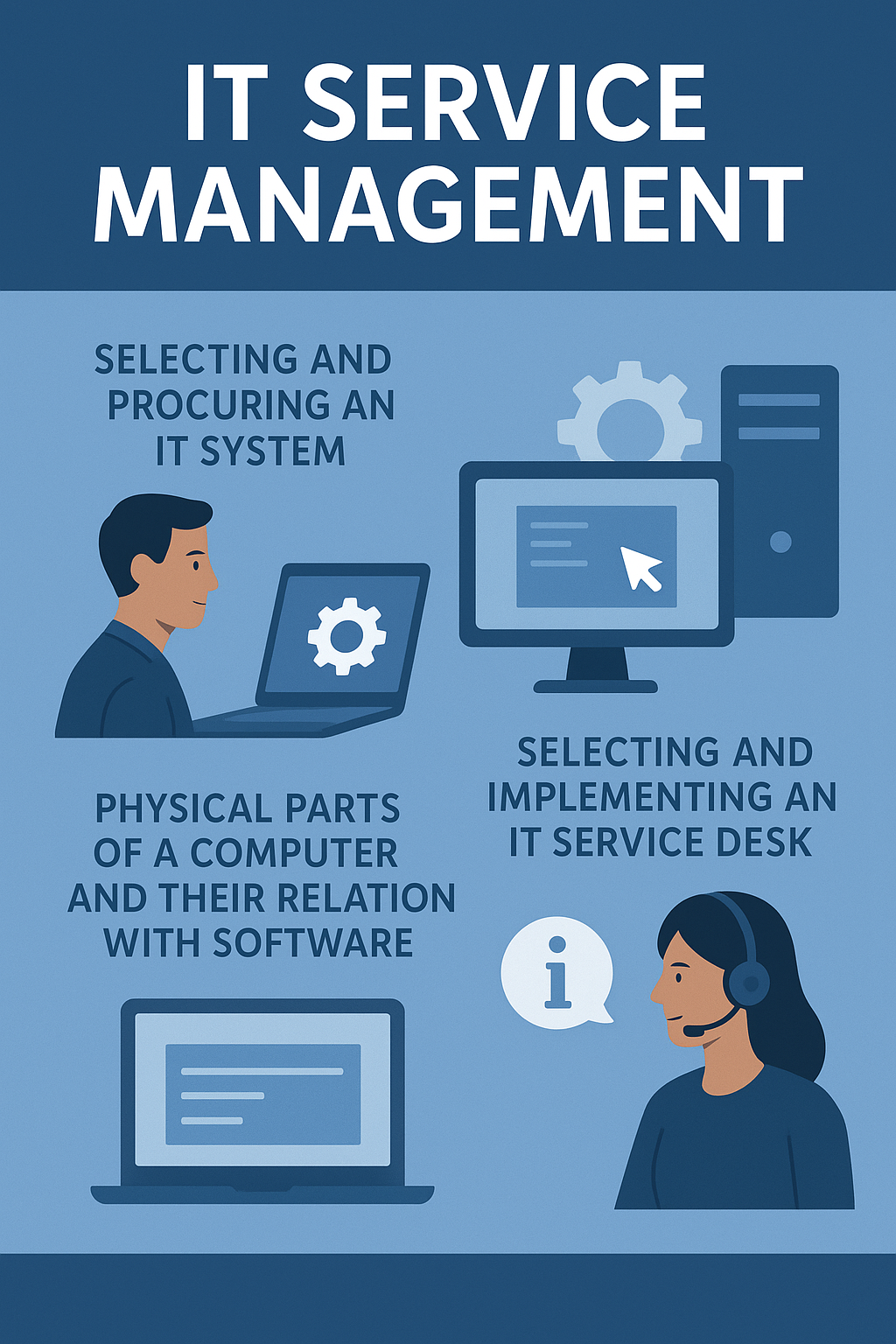
In this course, students will learn how to implement the processes involved in selecting and procuring an IT system, as well as how to set up and manage an IT Service Desk.
They will also gain an understanding of the physical components of a computer and how these interact with software. In addition, students will be introduced to key frameworks and standards that are essential to effective IT Service Management.
The
objectives of this course are to establish a sound foundation of financial
accounting principles and to ensure students understand the process of
gathering, recording, classifying, summarizing, reporting as well and
interpreting financial information. A first accounting course introduces the
student only briefly to actual accounting concepts, practices, and techniques.
The real focus of this course is on the meaning and usefulness of accounting
information. After completing this course, students will be able to use
accounting information for decision-making. Everyone needs a basic
understanding of accounting information, not only those students planning a
business career. Accounting information is useful in any career as well as in
personal financial activities.
The course is designed to enhance student’s knowledge of digital media and how it affects
society and industries. It focuses on the ways to use this knowledge with the proper tools to
interpret and analyze the digital environment to create and execute successful digital
campaigns. The course will include concepts such as networking, online communities,
sharing, collaborative practices, user-generated content, crowdsourcing, and gamification.
The students are expected to create a plan for a digital campaign by the end of the course
through the use of digital marketing tools such as Google Analytics, Facebook Ads and the
like.
This course focuses on how the digital technologies are shaping the future of societies
through emphasizing the principles of media literacy, digital media as well as the impact of
digital technology on the individual and society. The course also presents the Internet as a
double-edged sword for being positive and creative in the hyper-connected world and at the
same time negative for creating concerns related to technology addiction, copyright
infringement, unethical digital citizenship, and privacy issues. It also addresses how digital
culture impacts our daily lives as individuals and as a part of the society
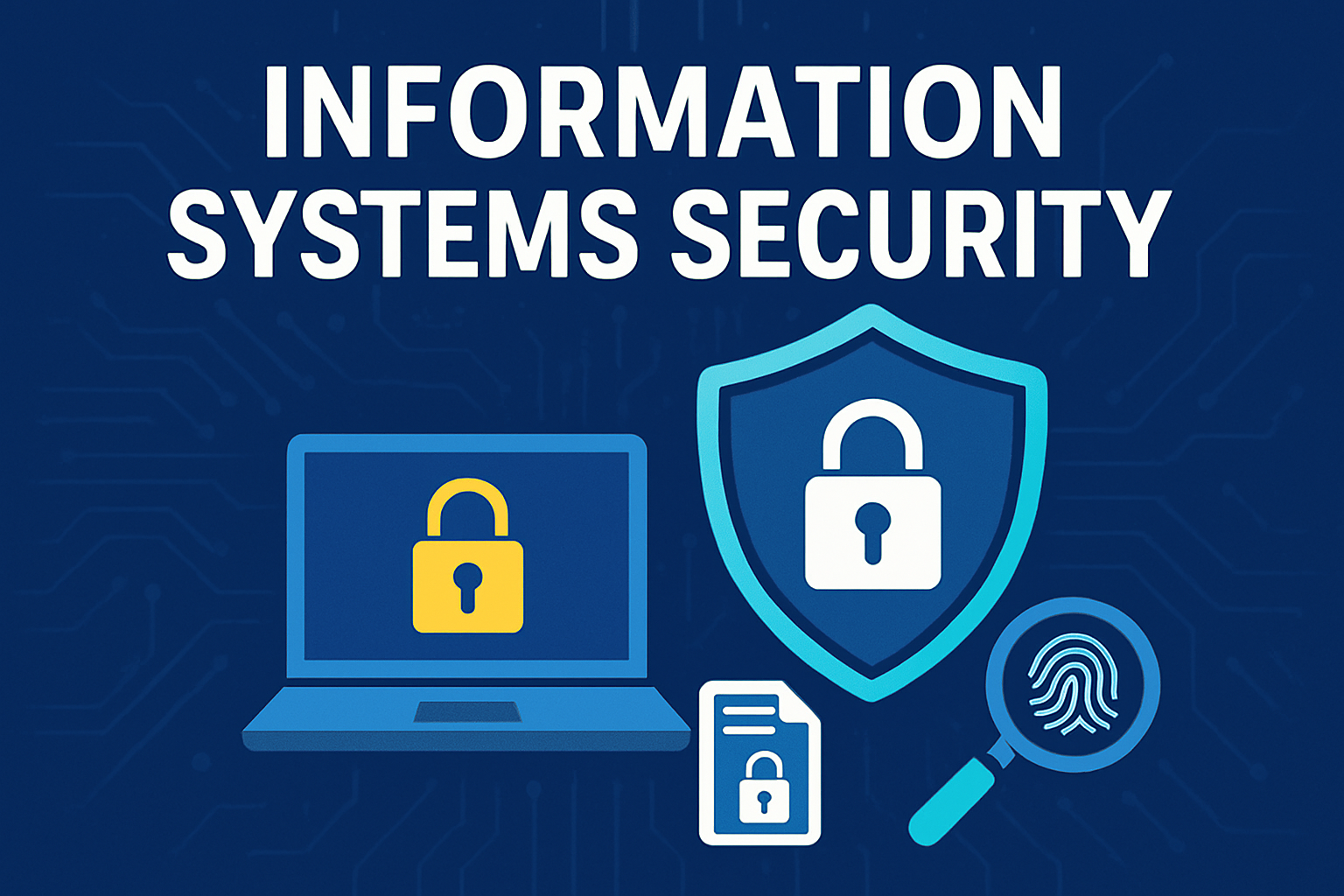
On the successful completion of the course, students will be able to:
1 . Analyze the cybersecurity threat environment and evaluate risks to information systems.
2. Develop security planning and policy frameworks that align with organizational needs.
3. Apply cryptographic methods and access control mechanisms to protect data and systems.
4. Design and secure network architectures using firewalls, host hardening, and application security practices.
Implement incident response and disaster recovery strategies to ensure business continuity and resilience.

This course provides a comprehensive introduction to the fundamental concepts and practices of international business. It begins with an overview of the nature, scope, and importance of international business and examines the forces driving the globalization of markets and the internationalization of firms. The course explores the influence of cultural differences on international business operations and managerial decision-making. It also discusses ethical issues, corporate social responsibility (CSR), sustainability, and governance in the global business environment. Furthermore, students will examine the major theories of international trade and foreign investment and analyze how political and legal systems in different national environments affect international business activities. |


The aim of this course is to provide the students with the basics of communication concepts
as well as traditional and new forms of media. The course teaches students the evolution of
traditional media into the digital platforms and creating new media form and explores the
various forms of media and the forces that shape its development. The course offers theories
of communication and how they relate to digital media. It also explores the ways technology
affects communication through emphasizing the implications of newer and interactive forms
of media
The course introduces the fundamental principles of marketing and their role in business strategy and
customer relationship management. It emphasizes the creation of customer value, the analysis of the
marketing environment, and the understanding of consumer needs and behaviors. Students will explore the
development of customer-driven marketing strategies, focusing on segmentation, targeting, and positioning,
alongside the effective integration of the marketing mix. By combining theoretical perspectives with practical
applications, the course equips students with the knowledge and skills to analyze markets and apply marketing
concepts in dynamic and competitive contexts.
● The role of marketing in creating value and building relationships
● Understanding customer needs and marketplace dynamics
● Analyzing the marketing environment and its forces
● Developing customer-driven strategies (segmentation, targeting, positioning)
● Designing and integrating the marketing mix (product, price, place, promotion)

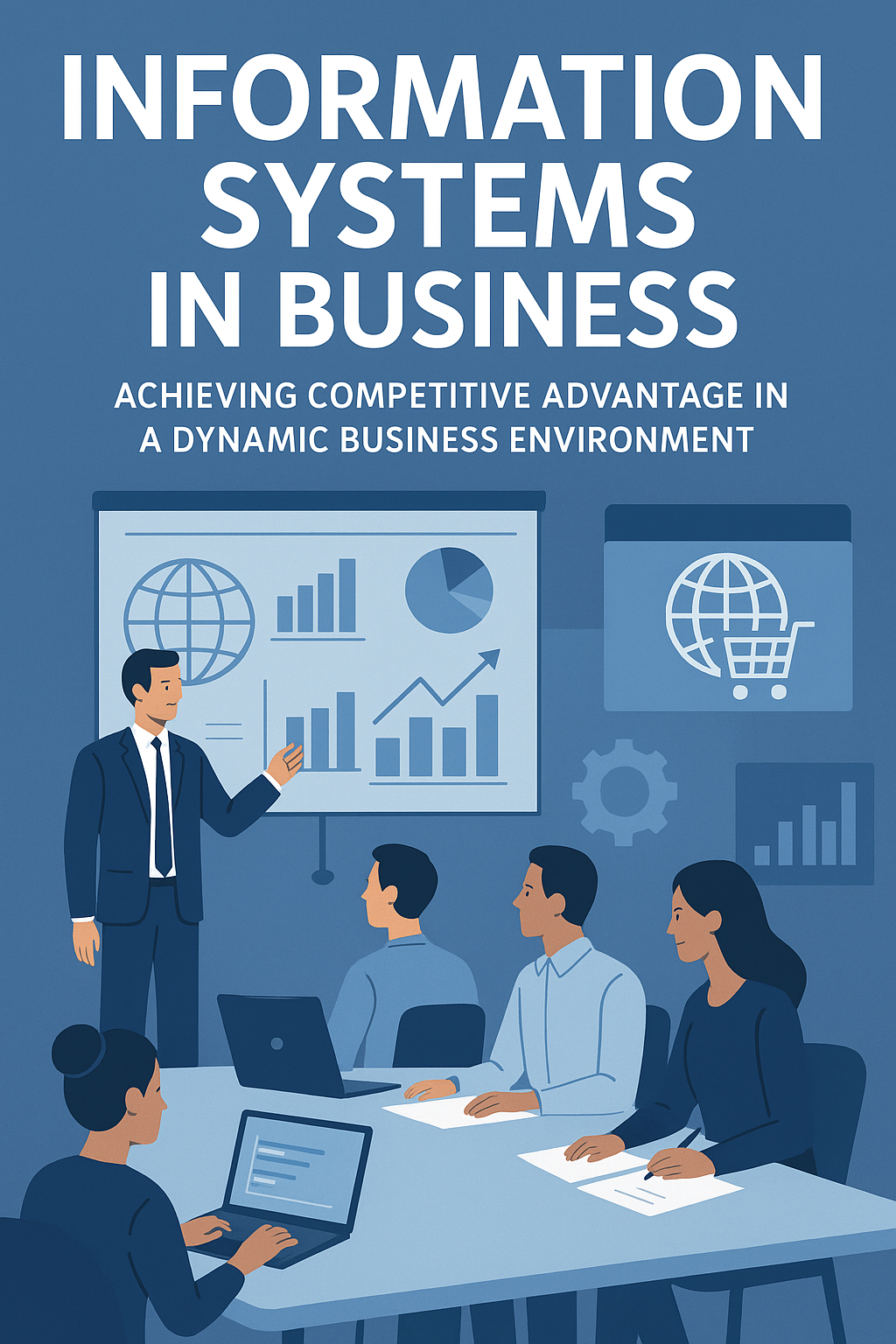
This lesson provides a comprehensive exploration of how organizations and businesses use information technologies and information systems to achieve their corporate goals. By the end of the lesson, students will have a clear understanding of the role Information Systems play in securing a competitive advantage in today’s dynamic business environment.
Key topics include: Information Systems in global business, global e-business (how businesses utilize information systems), the relationship between information systems, organizations, and strategy, the foundations of business intelligence, achieving operational excellence and customer intimacy, e-commerce (digital markets and digital goods), improving decision-making, and managing global systems.
Lecture Format: The course will be conducted in a face-to-face format, combining traditional lecture delivery with interactive learning methods. In addition to lectures, students will engage in case studies, both group and individual projects, centered around real-world business challenges. These hands-on activities are designed to bridge theoretical concepts with practical application, allowing students to analyze and solve issues faced by actual companies in today's business landscape.
Pricing is the only element of the marketing mix that generates revenue directly. Accordingly, it is one of the crucial strategic decisions businesses deal with for maximization of profits. Organizations and marketing professionals today face many challenges in optimizing pricing strategies, processes and tactics to acquire and retain consumers. In order to tackle the day's challenges, this course will provide the students with the basics of pricing concept and pricing strategies to help students understand and use the concepts when making pricing decisions.

The goal of Principles of Management-II is to introduce different functional areas of management. Planning, organizing, controlling, managing, and staffing concepts will be introduced through classic literature of management and will be examined through examples of today's management practices. Issues and examples relevant to the topics will be developed and discussed throughout this course. Course also provides an understanding of challenges in contemporary business environment. This course enables the student to learn get familiar with different departments within the organization. Topics to be covered in the course include motivational theories, leadership methods, human resource management, marketing, accounting, and finance.




The
course aims to introduce students to the core concepts, theories, and methods
of political science, with a focus on domestic politics, in order to develop students’
ability to think politically about institutions, actors, and processes of
governance.
The
course aims to introduce students to the core concepts, theories, and methods
of political science, with a focus on domestic politics, in order to develop students’
ability to think politically about institutions, actors, and processes of
governance.
|
Course Aims and Objectives: |
The main aim of this course is to provide students with an introductory yet comprehensive overview of quantitative tools that can be used to analyze management related problems. It also provides an opportunity to learn the application of some of the basic models used for business forecasting. Relationship with Other Courses: The students enrolling in this course must have taken statistics courses. However, the basic issues of the course require a good understanding of principles of microeconomics, management and math courses. |
|
Course Content: |
This course aims at introducing various quantitative tools that can be used in the analysis of various types of probability theory in making statistical inferences. Models for business forecasting and criteria for decision-making under conditions of uncertainty and risk. |
|
Course Learning Outcomes (CLOs): (Knowledge, skills and competencies expected to be achieved at the end of the course) |
A) On the successful completion of the course, students will be able to:
B) On successful completion of the course, students will have developed their skills in:
C) On successful completion of the course, students will have developed their appreciation of values related to:
|
In
this course students will learn how to assess the appropriate level of supply
flexibility for a given industry and explore strategies for economically
increasing a firm’s supply flexibility. Coordination and incentives across
multiple firms in a supply chain will be studied. While tactical models and
decisions are part of this course, the emphasis is on the qualitative insights
needed by general managers or management consultants. Demonstrations will be
discussed that companies can use the principles covered in this course to
significantly enhance their competitiveness.
The
objectives of this course are to establish a sound foundation of financial
accounting principles and to ensure students understand the process of
gathering, recording, classifying, summarizing, reporting as well and
interpreting financial information. A first accounting course introduces the
student only briefly to actual accounting concepts, practices, and techniques.
The real focus of this course is on the meaning and usefulness of accounting
information. After completing this course, students will be able to use
accounting information for decision-making. Everyone needs a basic
understanding of accounting information, not only those students planning a
business career. Accounting information is useful in any career as well as in
personal financial activities.
The
objectives of this course are to establish a sound foundation of financial
accounting principles and to ensure students understand the process of
gathering, recording, classifying, summarizing, reporting as well and
interpreting financial information. A first accounting course introduces the
student only briefly to actual accounting concepts, practices, and techniques.
The real focus of this course is on the meaning and usefulness of accounting
information. After completing this course, students will be able to use
accounting information for decision-making. Everyone needs a basic
understanding of accounting information, not only those students planning a
business career. Accounting information is useful in any career as well as in
personal financial activities.
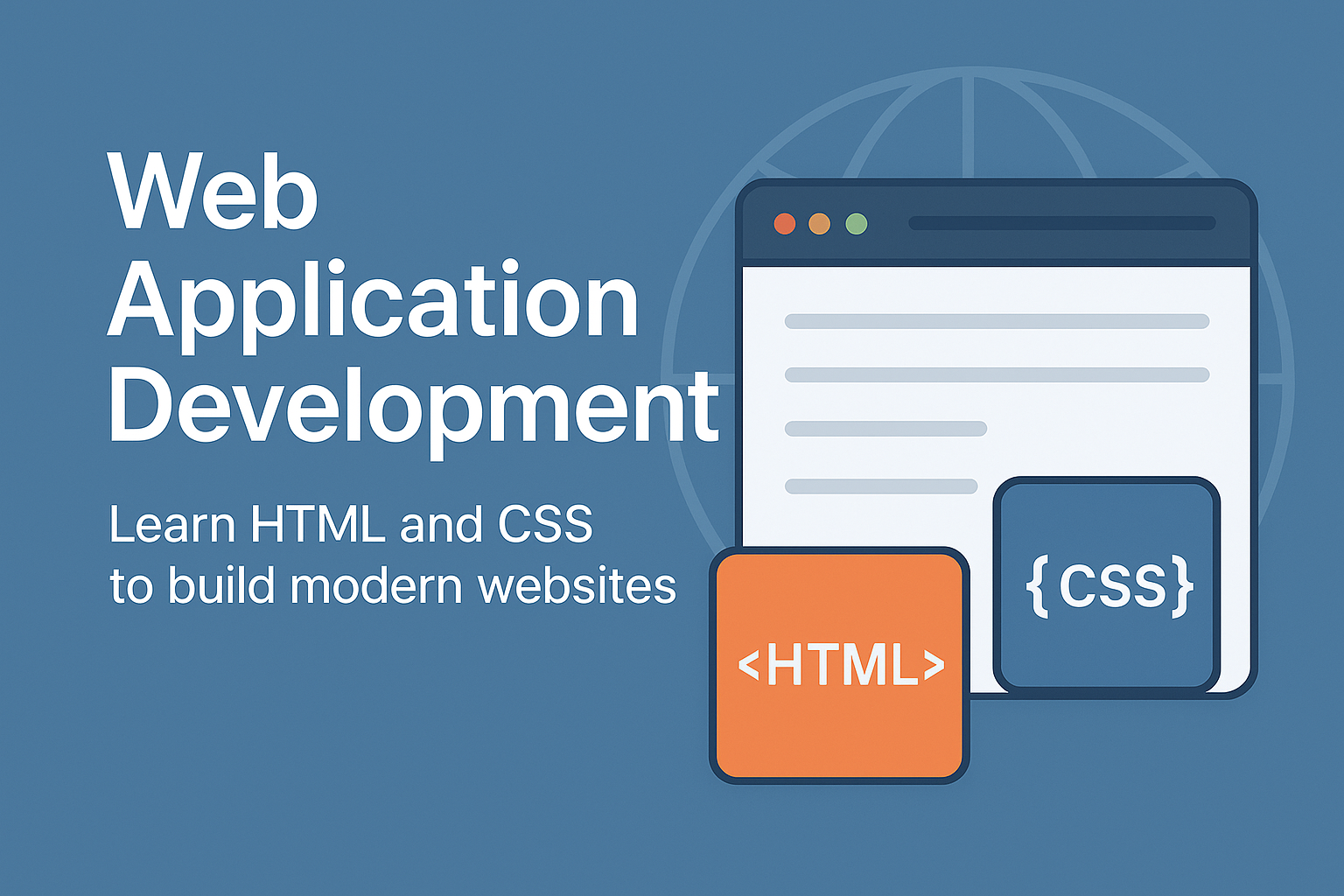
This course introduces students to the fundamentals of web application development. It covers the foundational technologies that power the internet, including HTML (HyperText Markup Language) and CSS (Cascading Style Sheets). Students will learn how to structure web content, style web pages, and create interactive, user-friendly websites. The course emphasizes practical skills, enabling learners to build functional web pages from scratch and understand how web applications work in a real-world context. By the end of the course, students will be able to design and implement responsive, visually appealing web applications suitable for personal projects or professional development.