This course provides a comprehensive introduction to the principles, methodologies, tools, and techniques used in the analysis and design of information systems within organizational environments. Drawing on concepts from the textbook Modern Systems Analysis and Design by Joseph S. Valacich and Joey F. George, the course equips undergraduate MIS students with the knowledge and practical skills required to plan, model, analyze, and design effective information systems solutions.
Students will explore the full Systems Development Life Cycle (SDLC), including project identification and selection, feasibility analysis, requirements determination, process and data modeling, system design, implementation strategies, and system maintenance. Emphasis is placed on aligning information systems with business objectives, improving organizational efficiency, and supporting decision-making processes.
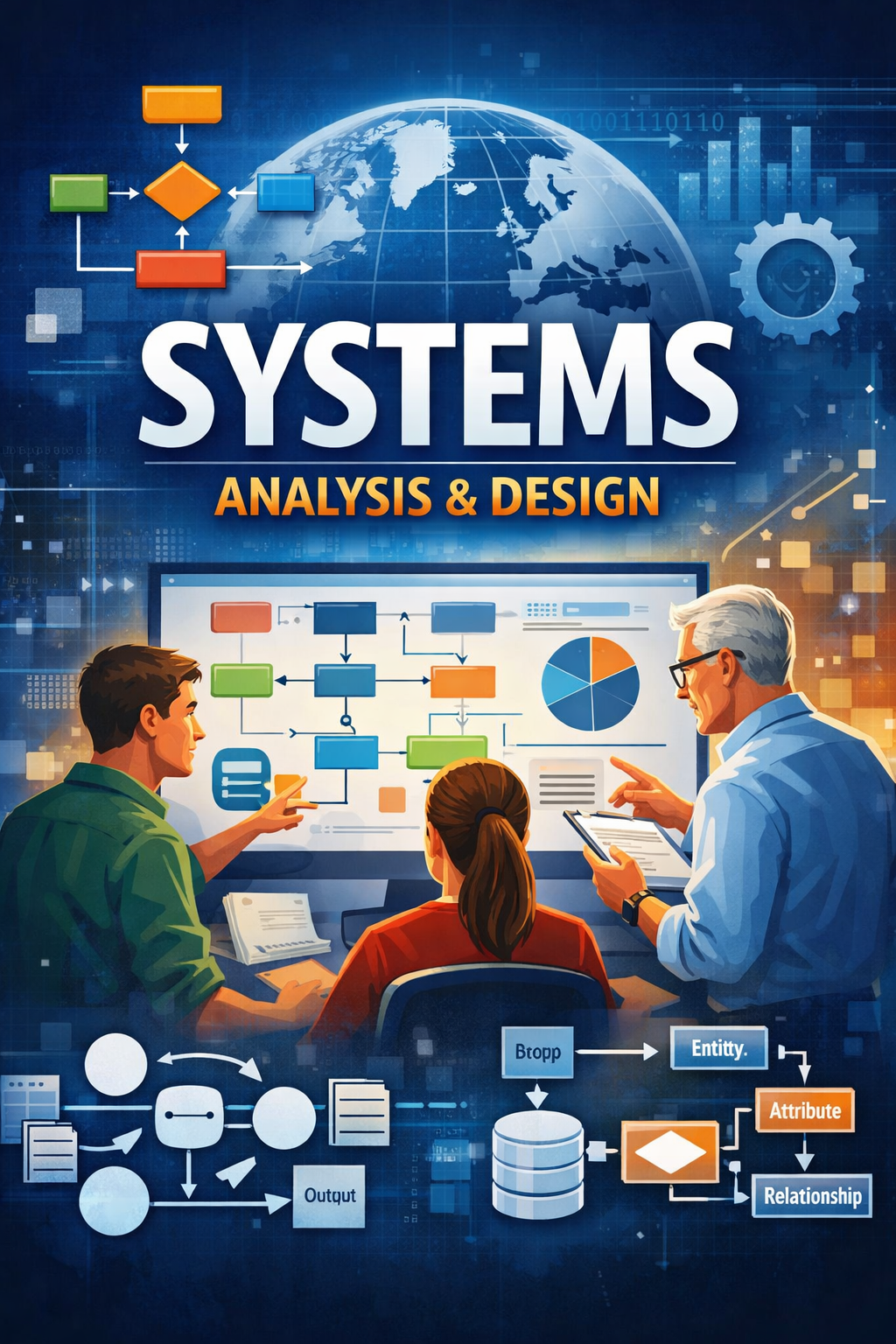
The course integrates both structured and object-oriented approaches, highlighting contemporary development practices such as Agile methods, prototyping, and user-centered design. Practical exercises, case studies, and modeling projects enable students to apply tools such as Data Flow Diagrams (DFDs), Entity-Relationship Diagrams (ERDs), UML models, and interface design techniques.
- Teacher: Joshua SOPURU